Art Therapy in Milwaukee, WI
IN PERSON IN TOSA AREA
ONLINE ACROSS WI & CO
You can’t think your way out of this.

Do you have a hard time finding the words to say what’s really going on?
You’ve tried therapy. It helped, sort of. But you’re still not feeling better. You noticed yourself talking faster and faster, trying to explain everything in a short amount of time. Your thoughts raced, your heart pounded, and suddenly you were overwhelmed and fidgeting—and still not getting to what really matters.
You wondered, “Am I doing this right?” It feels like something’s missing altogether.
what is art therapy?
Art therapy can help you find clarity in a way words can’t.
Art therapy is a form of therapy that uses the creative process—drawing, painting, molding clay, gluing a collage, or even making a simple scribble—to explore emotions, memories, patterns, and stuck places.
You don’t have to be an artist. Most of my clients haven’t touched art materials since elementary school. It’s not always about what it looks like, but the process of making it. Art gives you a different way to express what’s happening inside, especially when what you’re feeling can’t be neatly put into sentences. Sometimes, it’s easier to point to an image and say, “That’s what it feels like,” than to try and explain it out loud.
How Art Therapy Helps
-
When you're anxious or overwhelmed, talking can sometimes make things worse. You try to get it all out in a short window of time—your heart races, your speech speeds up, and your thoughts start to spiral. It’s exhausting.
Art interrupts that cycle. It gives your hands something to do, which helps your nervous system slow down. It brings your attention into your body and your senses—calming the overwhelm without requiring you to “talk it through” right away.
-
When you're creating, you're shifting out of your thinking brain (the frontal cortex) and into deeper brain systems—like the amygdala, where anxiety lives. That shift can help you feel more grounded and open to insight.
Many clients uncover things during art therapy that hadn’t surfaced—even after years in talk therapy. It’s not magic—it’s that art has a way of bypassing your defenses and giving you access to what’s under the surface. -
A bridge to your inner world—showing you who you are, where you’ve been, and where you might grow. It puts your problems on paper so you can see them from a whole new perspective.
Like a funnel, it helps narrow down chaotic thoughts and emotions into something that makes sense and feels manageable.
The images you create become a bridge between your inner world and the therapy space—a starting point for healing. And because the process helps quiet that inner critic, you can connect with what’s real—without judgment or mental filters getting in the way.
How Art Therapy Can Support You
-
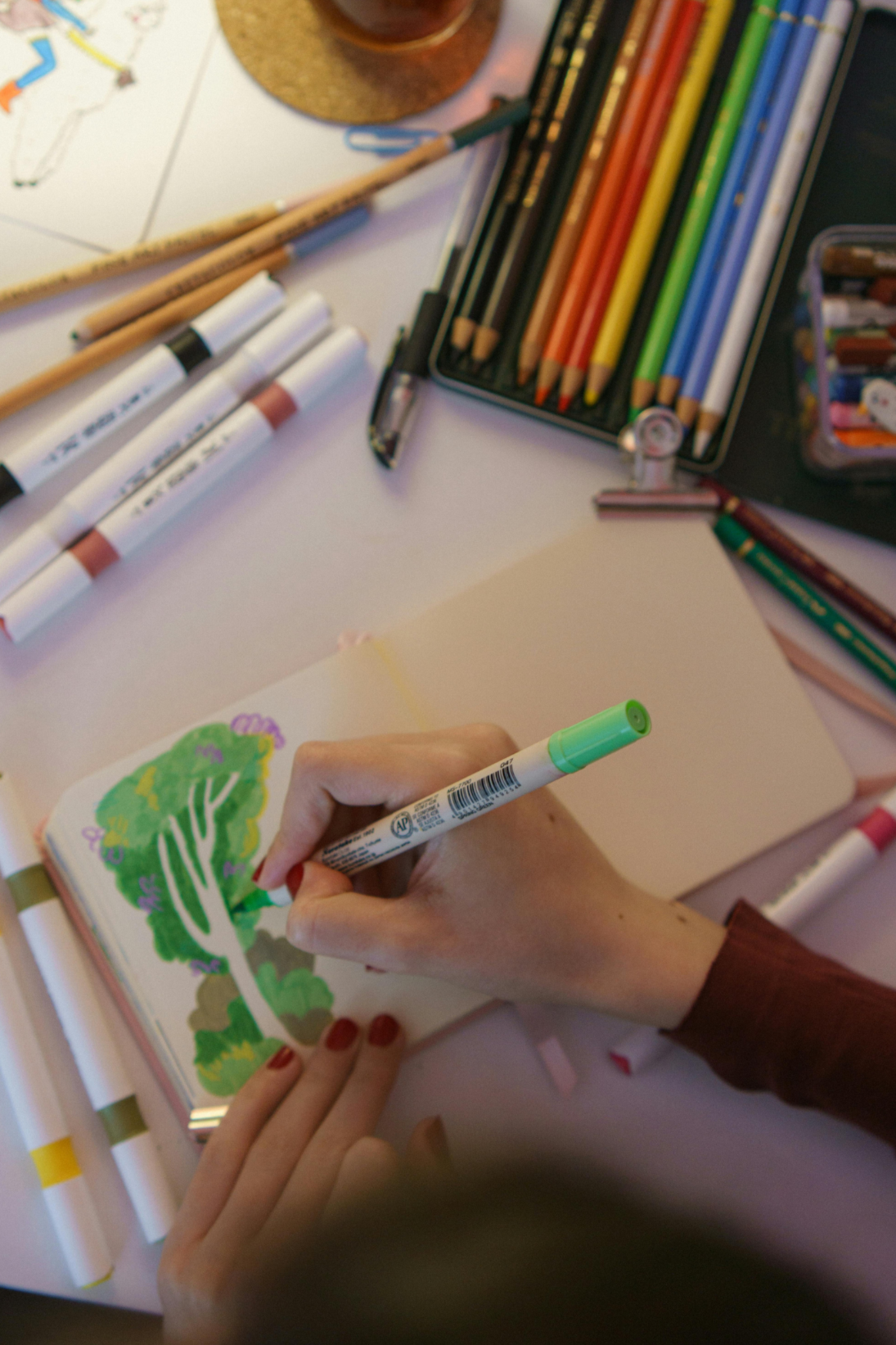
Art therapy offers a grounding, sensory-based way to slow your system down. When your mind is racing and your body is buzzing, art can serve as an anchor. It helps narrow the chaos into something tangible—like a funnel, turning swirling thoughts and emotions into lines, colors, and shapes you can see and work with.
Over time, the process helps you notice, express, and regulate emotions more effectively. It’s especially useful if you're someone who tends to overexplain or struggle to articulate what’s really going on. Here, you don’t need the “right” words—just a willingness to create.
-
Parenting can feel like a marathon you never signed up for. You’re doing everything you can to hold it together—for your kids, your household, and everyone else—while quietly unraveling inside.
Art therapy offers a place to slow down. A space where you don’t have to explain everything or keep it all together. Instead, you can explore your own thoughts and feelings—what’s really going on beneath the surface.
That might look like:Scribbling out the chaos in your head
Drawing a body map of where anxiety lives in your body
Collaging the parts of yourself that feel invisible
You begin to reconnect with you—not just the version who’s always doing, fixing, and giving, but the one who also needs space to feel, breathe, and be.
-
This time in your life can feel confusing, layered, and like too much at once. You might assume it’s just stress—but the shifts happening in your hormones, body, energy, mood, and relationships are real and far-reaching. One moment you’re yourself, and the next you’re snapping over something small or feeling completely untethered.
Art therapy gives you a space to explore what’s happening beneath the surface—without judgment or pressure to make sense of it all right away.
Together, we might:
Scribble out the frustration you felt this morning
Create a body map to notice where tension and emotions live
Build a collage that helps you process what’s shifting in your identity, your relationships, or your sense of self
This work can be calming, clarifying, and deeply validating—a place where the messiness is welcome, and where you can begin to reconnect with who you are becoming, not just who you used to be. It can also help you recognize what’s actually going on (yes, it might be perimenopause), so you can seek the right support in therapy—and outside of therapy.
WHAT TO EXPECT:
Every art therapy session looks a little different depending on your goals, but here’s the general flow:
We’ll begin with a simple check-in—what’s going on for you right now? From there, we’ll move into a creative process that supports deeper exploration. You might draw, paint, collage, respond to a prompt, or simply follow your intuition. Sometimes I offer structure; other times we let the process unfold naturally.
You never have to show or explain your art unless you feel ready. I’m not here to interpret your work or tell you what it means. Your art is an expression of your inner world—and only you can truly know what it represents.
What I can do is help you reflect on your art in ways that support your goals. I might notice a theme you hadn’t seen, or gently invite you to explore what’s coming up for you as you look at your piece. Often, the art itself becomes a guide—offering insights and clarity.
Many clients are surprised by how much comes up once they stop trying to “figure it out” and simply start creating. Art leads the way.
A few art examples of what we might do:
Body Map of where anxiety lives in your body
Put together a collage with magazine cuttings that helps you organize your priorities
Draw with both hands at once, just like your toddler might do
Mapping the roles in your family with a “roles portrait.”
Scribbling outside the lines to challenge perfectionism
Using color and texture to express emotions when words fall short
If we’re working online, I’ll guide you in using materials you already have at home—paper, pens, glue sticks, your child’s crayola markers. In-person sessions offer a range of art supplies.

Art therapy can help you…
Slow down racing thoughts and feel more grounded in your body
Express emotions that feel too tangled or overwhelming to put into words
Uncover insights that talk therapy alone might not reach
Loosen the grip of self-criticism and perfectionism
Reconnect with parts of yourself that have been quiet for too long
Feel more like you—clearer, calmer, and more resourced for life’s demands
faqs
Common questions about art therapy
-
Not at all. Most of my clients haven’t picked up a crayon or paintbrush since grade school. In art therapy, your artwork might look messy or unfinished—and that’s completely okay. We might even start with something simple, like a scribble or a color that reflects how your body feels in the moment.
The goal isn’t to create a pretty picture. It’s to explore, express, and make sense of what’s going on inside. Your artwork becomes a mirror. It can reveal things that are hard to put into words, help organize chaotic thoughts, and offer a visual way to connect with yourself—without the pressure to “do it right.”
-
That’s totally normal. You don’t have to come in with ideas—we’ll discover them together. I’ll guide you through the process with simple prompts, or we’ll just start with a scribble and see where it goes. It’s about expression, not perfection.
-
Only if you want to. Some clients find it helpful to talk about what they created. Others prefer to let the art speak for itself.
I’ll never push you to interpret your work or say something before you’re ready. It’s not my job to tell you what your art means—your interpretation is your own.
What I can do is help you reflect on your art in ways that support your goals. I might notice a theme or invite you to explore what comes up as you look at your work. Often, the art itself becomes a source of insight—helping you learn something new about yourself that words alone might not reveal.
-
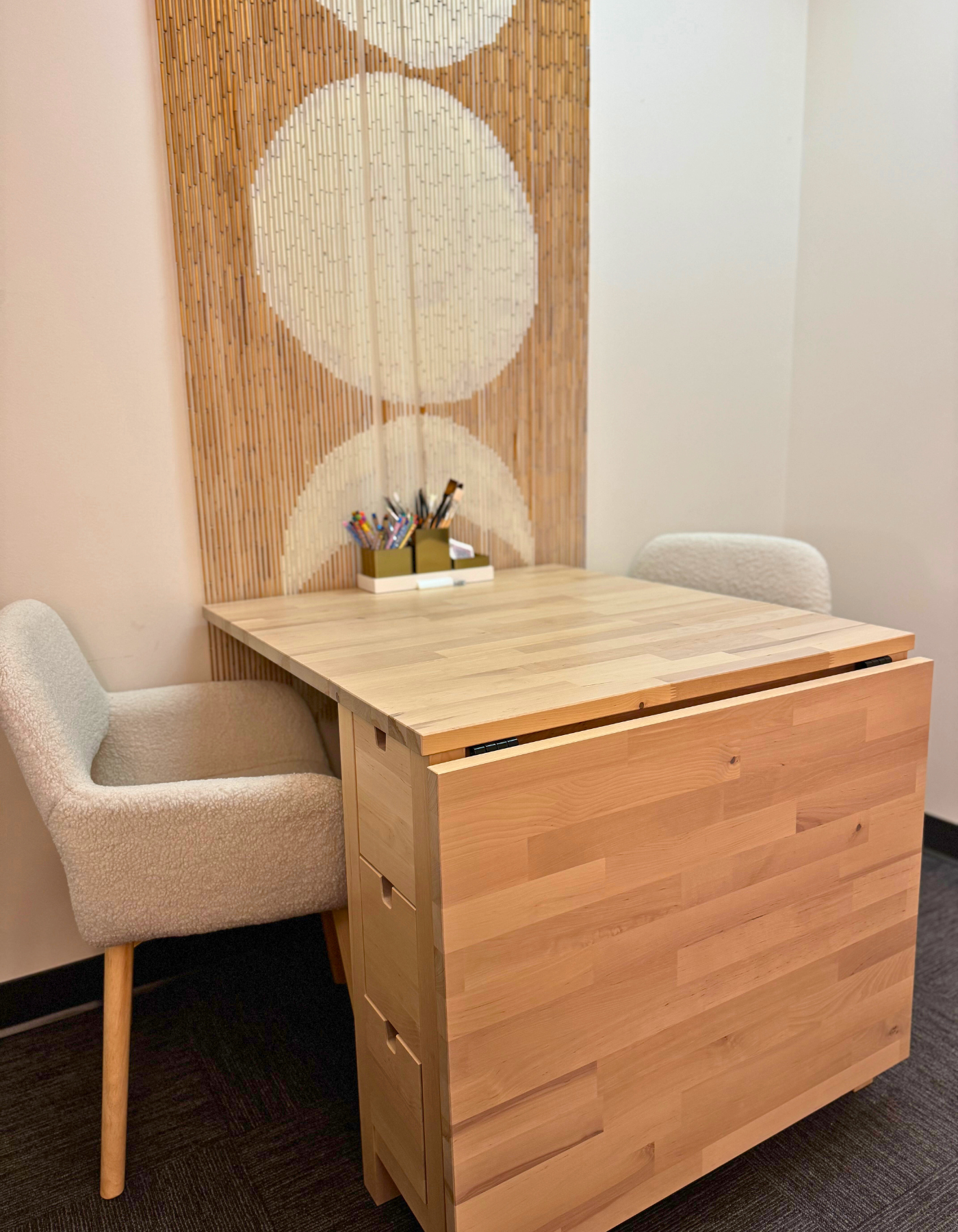
In person, I offer a wide range of materials: markers, oil pastels, colored pencils, watercolor, acrylic paint, collage materials (including lots of different magazines), yarn, clay-like materials, and even found objects. If there’s something specific you enjoy, I’m happy to incorporate it.
In virtual sessions, we keep things simple and accessible. Most clients start with just paper and whatever’s already at home—like a pencil, crayons, or the Crayola markers your kids left on the kitchen table. I’ll guide you through using what you have, and if you’re curious to explore more, I can help you find materials that support your process.
-
Not at all. Art therapy is incredibly powerful for adults—especially if you’re feeling anxious, overwhelmed, or just tired of trying to explain everything in words.
In fact, many of my adult clients begin by saying, “I’m not creative,” or “I haven’t made art since I was a kid.” But that’s part of what makes it so powerful. Art offers a different way to process emotions, organize thoughts, and gain insight—without having to talk through every detail.You don’t need to be an artist. You just need a little curiosity about what might happen when you give your hands something to do and let your inner world take shape on the page.
-
Yes, absolutely. Art therapy is a clinically grounded, evidence-informed form of therapy—backed by neuroscience and practiced by licensed, trained professionals.
As a nationally credentialed Art Therapist (ATR), I’ve completed graduate-level training in both mental health and the therapeutic use of art.
We’ll still talk, reflect, and work toward your goals—just with more tools available. Art helps access healing in ways that traditional talk therapy sometimes can’t reach. It’s not “just coloring.” It’s a powerful, integrated approach to therapy that’s grounded in both science and creative expression. Learn more: “Why art therapy isn’t just for Kids” blog post.
-
Yes. I don’t require clients to make art in every session—or at all. Some clients prefer other forms of creativity, like music, gardening, woodworking, poetry, or writing.
As a trained art therapist, I naturally think in images and patterns. I often help clients see connections they haven’t noticed before—visualizing themes, emotions, or dynamics that suddenly make things click.
I do ask that clients stay open to the possibility of creative exploration. But if you truly don’t want to make art, I won’t force it. Therapy will always be collaborative and tailored to you.
Ready to get started?